Imagine a dancer rapidly doing 30 spins in a row like a hurricane, stopping completely still on the final beat, while at the same time their feet are drumming out a rhythm so fast you get dizzy just by watching. That’s Kathak for you.
What is Kathak, you ask? Kathak is one of India’s eight major dance forms, originating from North India. The word Kathak comes from the word Katha, which means “story.” Historically, Kathak dancers, known as Kathakars, traveled from village to village, telling stories from mythology through movement, and over time, the dance evolved in royal courts, especially during the Mughal era.
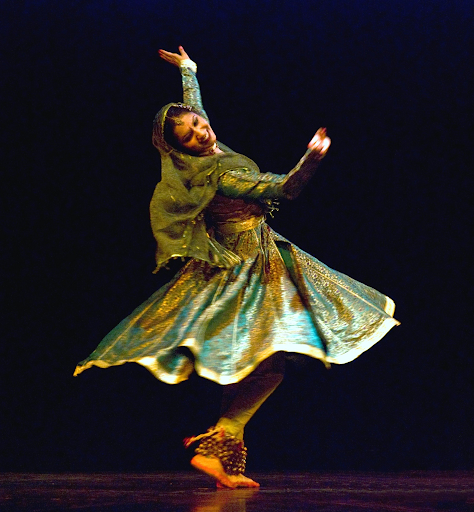
The first thing in Kathak you will notice isn’t the movement, but the sound. Kathak performers perform barefoot, but they wear ghungroos, heavy metal bells wrapped around their ankles. These bells are like their instruments.
The dancers hit different parts of their feet on the floor, and the bells on their ankles make any sound from a light sprinkling of rain to a loud thunderstorm. Their footwork, known as tatkar, is very precise and fast. It often matches rhythmic patterns played by live musicians.
Using hand gestures and facial expressions called mudras, one single dancer can play many different characters. They can switch from a playful child to a strong warrior in seconds. It’s essentially acting and dancing at the same time, allowing the dancer to tell an entire story without saying a single word. Their expressions bring emotion to life, making the audience feel joy, sadness, love, tension, and more just through a glance or small movement.
Another defining feature of kathak, and by far the most noticeable, is its spins called chakkars. These spins are often fast and controlled and performed in long sequences without losing balance. Each spin ends exactly on beat, showing the precision and training of the dancers.
While Kathak has deep roots in royal courts and ancient temples, it’s still being used today. Today, it’s a dance being performed globally, also played in the West, not just in India. Every movement carries history, and every performance becomes a new story waiting to be told.